

- University
- Academic
- Schools/Vocational Schools
- Vocational School of Justice
- Vocational School
- Vocational School
- Department of Banking and Insurance (Turkish)
- Department of Computer Programming (Turkish)
- Department of Foreign Trade (Turkish)
- Department of Graphic Design (Turkish)
- Department of Interior Design (Turkish)
- Department of Construction Technology (Turkish)
- Department of Occupational Health and Safety (Turkish)
- Department of Media and Communication (Turkish)
- Department of Architectural Restoration (Turkish)
- Department of Radio and Tv Programming (Turkish)
- Department of Civil Aviation Cabin Services (Turkish)
- Department of Civil Aviation Transportation Management (Turkish)
- Department of Tourism and Hotel Management (Turkish)
- Department of Applied English Translation
- Vocational School Of Health Services
- Vocational School Of Health Services
- Department of Child Development (Turkish)
- Department of Physiotherapy (Turkish)
- Department of Paramedic (Turkish)
- Department of Opticianry (Turkish)
- Department of Medical Documentation and Secreteriat (Turkish)
- Department of Medical Imaging Techniques (Turkish)
- Department of Medical Laboratory Techniques (Turkish)
- Department of Elderly Care (Turkish)
- School of Applied Management Sciences
- School of Foreign Languages
- Faculties
- Faculty of Arts and Sciences
- Faculty of Fine Arts and Design
- Faculty of Law
- Faculty of Communication
- Faculty of Business
- Faculty of Engineering
- Faculty of Engineering
- Department of Computer Engineering
- Department of Biomedical Engineering
- Department of Electrical and Electronics Engineering
- Department of Industrial Engineering
- Department of Food Engineering
- Department of Genetics and Bioengineering
- Department of Aerospace Engineering
- Department of Civil Engineering
- Department of Mechanical Engineering
- Department of Mechatronics Engineering
- Department of Software Engineering
- Faculty of Health Sciences
- Medicine
- Graduate School
- Common Courses
- Schools/Vocational Schools
- Research
- Research Centers
- Library
- Smart Campus
- Technology Transfer Office
- İzmir Sciencepark
- Continuous Education Center (EKOSEM)
- Children's University
- Ethics Committee
- Teaching and Learning Center (EKOEĞİTİM)
- Psychology Application and Research Center
- Researcher Training Coordinatorship
- Research Collaborations And Innovation Coordinatorship
- Campus
- INTERNATIONAL
- Contact
- 25TH YEAR
Department of Electrical and Electronics Engineering
Course Structure Diagram with Credits
To see the course details (such as objectives, learning outcomes, content, assessment and ECTS workload), click the relevant Course Code given in the table below.
| 1. Year Fall Semester | ||||||
| Code | Pre. | Course Name | Theory | App/Lab | Local Credits | ECTS |
| ENG 101 | Academic Skills in English I | 2 | 2 | 3 | 3 | |
| FENG 101 | Fundamentals of Engineering Culture | 2 | 0 | 2 | 4 | |
| IUE 100 | Orientation and Career Planning | 1 | 0 | 1 | 2 | |
| MATH 153 | Calculus I | 2 | 2 | 3 | 6 | |
| PHYS 100 | General Physics I | 2 | 2 | 3 | 6 | |
| SE 113 | Introduction to Programming | 2 | 2 | 3 | 6 | |
| SFL 1013 | Second Foreign Languages I | 2 | 2 | 3 | 3 | |
| Total : | 30 | |||||
| 1. Year Spring Semester | ||||||
| Code | Pre. | Course Name | Theory | App/Lab | Local Credits | ECTS |
| CHEM 100 | General Chemistry | 2 | 2 | 3 | 6 | |
| EEE 102 | Introduction to Electrical and Electronics Engineering | 2 | 2 | 3 | 4 | |
| ENG 102 | Academic Skills in English II | 2 | 2 | 3 | 4 | |
| MATH 154 |

|
Calculus II | 2 | 2 | 3 | 6 |
| PHYS 102 | General Physics II | 2 | 2 | 3 | 6 | |
| SFL 1024 | Second Foreign Languages II | 2 | 2 | 3 | 4 | |
| Total : | 30 | |||||
| 2. Year Fall Semester | ||||||
| Code | Pre. | Course Name | Theory | App/Lab | Local Credits | ECTS |
| EEE 207 |
|
Electric Circuit Analysis I | 3 | 2 | 4 | 7 |
| EEE 213 | Computational Methods for Engineers | 2 | 2 | 3 | 7 | |
| EEE 281 |
|
Engineering Mathematics I | 2 | 2 | 3 | 6 |
| MATH 240 |
|
Probability for Engineers | 3 | 0 | 3 | 6 |
| SFL 201 | Second Foreign Languages III | 2 | 2 | 3 | 4 | |
| Total : | 30 | |||||
| 2. Year Spring Semester | ||||||
| Code | Pre. | Course Name | Theory | App/Lab | Local Credits | ECTS |
| EEE 208 |
|
Electric Circuit Analysis II | 3 | 2 | 4 | 6 |
| EEE 232 |
|
Microelectronic Devices and Circuits | 3 | 2 | 4 | 6 |
| EEE 242 | Digital Design | 2 | 2 | 3 | 5 | |
| EEE 282 |
|
Engineering Mathematics II | 2 | 2 | 3 | 5 |
| ENG 210 | Technical English for Engineers | 3 | 0 | 3 | 4 | |
| SFL 202 | Second Foreign Languages IV | 2 | 2 | 3 | 4 | |
| Total : | 30 | |||||
| 3. Year Fall Semester | ||||||
| Code | Pre. | Course Name | Theory | App/Lab | Local Credits | ECTS |
| CE 342 |
|
Fundamentals of Microprocessors | 2 | 2 | 3 | 6 |
| EEE 309 |
|
Signals and Systems | 3 | 2 | 4 | 6 |
| EEE 322 |
|
Engineering Electromagnetics | 2 | 2 | 3 | 6 |
| EEE 333 |
|
Analog Electronic Circuits | 3 | 2 | 4 | 6 |
| MATH 236 |
|
Engineering Statistics | 3 | 0 | 3 | 6 |
| Total : | 30 | |||||
| 3. Year Spring Semester | ||||||
| Code | Pre. | Course Name | Theory | App/Lab | Local Credits | ECTS |
| EEE 302 |
|
Principles of Communication | 3 | 2 | 4 | 7 |
| EEE 307 |
|
Electrical Energy Conversion | 2 | 2 | 3 | 6 |
| EEE 334 |
|
Digital Electronic Circuits | 3 | 2 | 4 | 7 |
| EEE 346 | Fundamentals of Control Systems | 3 | 2 | 4 | 6 | |
| TMD 001 | Complementary Engineering Courses | 3 | 0 | 3 | 4 | |
| Total : | 30 | |||||
| 4. Year Fall Semester | ||||||
| Code | Pre. | Course Name | Theory | App/Lab | Local Credits | ECTS |
| EEEST 400 | Engineering Summer Training (4 weeks) | 0 | 0 | 0 | 5 | |
| ELEC 001 | Elective Course I | 3 | 0 | 3 | 5 | |
| ELEC 002 | Elective Course II | 3 | 0 | 3 | 5 | |
| ELEC 003 | Elective Course III | 3 | 0 | 3 | 5 | |
| FENG 497 |
|
Multidisciplinary Engineering Projects | 2 | 2 | 3 | 6 |
| TURK 100 | Turkish | 4 | 0 | 4 | 4 | |
| Total : | 30 | |||||
| 4. Year Spring Semester | ||||||
| Code | Pre. | Course Name | Theory | App/Lab | Local Credits | ECTS |
| ELEC 004 | Elective Course IV | 3 | 0 | 3 | 5 | |
| ELEC 005 | Elective Course V | 3 | 0 | 3 | 5 | |
| ELEC 006 | Elective Course VI | 2 | 2 | 3 | 6 | |
| FENG 498 |
|
Engineering Capstone | 0 | 6 | 3 | 6 |
| HIST 100 | Principles of Atatürk and History of Revolution | 4 | 0 | 4 | 4 | |
| TMD 002 | Complementary Engineering Courses | 3 | 0 | 3 | 4 | |
| Total : | 30 | |||||
| Elective Courses | ||||||
| Code | Pre. | Course Name | Theory | App/Lab | Local Credits | ECTS |
| AE 308 | Introduction to Wireless Communication | 3 | 0 | 3 | 5 | |
| CE 304 |
|
Operating Systems Security | 2 | 2 | 3 | 5 |
| CE 322 | Pattern Recognition | 3 | 0 | 3 | 5 | |
| CE 323 |
|
Operating System Concepts | 3 | 2 | 4 | 7 |
| CE 340 | Cryptography and Network Security | 3 | 0 | 3 | 5 | |
| CE 360 | Wireless Communications | 3 | 0 | 3 | 5 | |
| CE 401 |
|
Algorithms Design | 3 | 0 | 3 | 5 |
| CE 403 |
|
Computer Architecture and Organization | 2 | 2 | 3 | 5 |
| CE 450 | Distributed Systems and Parallel Computing | 3 | 0 | 3 | 5 | |
| CE 462 | Intoduction to Sparse Representations | 3 | 0 | 3 | 5 | |
| CE 466 | Computer Vision | 3 | 0 | 3 | 5 | |
| CE 470 | Introduction to Neural Networks | 3 | 0 | 3 | 5 | |
| CE 475 |
|
Fundamentals and Applications of Machine Learning | 2 | 2 | 3 | 7 |
| CE 477 | Data Science | 3 | 0 | 3 | 5 | |
| CE 490 |
|
Introduction to Digital Image Processing | 3 | 0 | 3 | 5 |
| EEE 335 |
|
Application Development for Internet of Things Systems | 2 | 2 | 3 | 6 |
| EEE 406 | Principles of Biomedical Engineering | 3 | 0 | 3 | 5 | |
| EEE 413 |
|
Digital Signal Processing | 2 | 2 | 3 | 6 |
| EEE 416 |
|
Radar, Sonar and Sismic Signal Processing | 2 | 2 | 3 | 5 |
| EEE 420 | FPGA (Field Programmable Gate Array) Design Using HDL (Hardware Description Language) | 2 | 2 | 3 | 6 | |
| EEE 421 |
|
Electromagnetic Waves | 2 | 2 | 3 | 6 |
| EEE 422 |
|
Microwave Engineering | 3 | 0 | 3 | 5 |
| EEE 424 |
|
Antennas | 2 | 2 | 3 | 5 |
| EEE 425 | Photovoltaics Power Systems | 2 | 2 | 3 | 6 | |
| EEE 426 | Remote Sensing | 2 | 2 | 3 | 5 | |
| EEE 427 | Introduction to Power Electronics | 3 | 0 | 3 | 5 | |
| EEE 432 |
|
Measurement and Instrumentation | 2 | 2 | 3 | 6 |
| EEE 435 |
|
Communication Electronics | 2 | 2 | 3 | 6 |
| EEE 442 |
|
Digital Communications | 3 | 0 | 3 | 5 |
| EEE 453 |
|
Adaptive Filters | 2 | 2 | 3 | 6 |
| EEE 456 |
|
Signal Processing Applications Using MATLAB | 2 | 2 | 3 | 6 |
| EEE 461 |
|
Embedded System Design | 2 | 2 | 3 | 6 |
| EEE 462 | Medical Imaging and Image Processing | 3 | 0 | 3 | 5 | |
| EEE 471 | High Voltage Engineering | 3 | 0 | 3 | 5 | |
| EEE 472 |
|
Electrical Energy Transmission and Distribution | 3 | 0 | 3 | 5 |
| MCE 411 |
|
Introduction to Robotics | 3 | 2 | 4 | 6 |
| MCE 412 |
|
Autonomous Robotics | 2 | 2 | 3 | 6 |
| MCE 420 | Automation and Industry 4.0 | 2 | 2 | 3 | 6 | |
| Complementary Engineering Courses | ||||||
| Code | Pre. | Course Name | Theory | App/Lab | Local Credits | ECTS |
| FENG 310 | Research Methods in Engineering | 3 | 0 | 3 | 5 | |
| FENG 320 | Environmental Impact Analysis and Life Cycle Assessment | 3 | 0 | 3 | 5 | |
| FENG 330 | Occupational Health and Safety | 3 | 0 | 3 | 5 | |
| FENG 372 | Project Management | 3 | 0 | 3 | 5 | |
| Additional Notes |
You can access the curriculum for students who started their education between 2013 and 2019 here. You can access the curriculum for students who started their education between 2020 and 2024 here.
To graduate, a total of 240 ECTS credits must be taken. Students in the department must complete Technical Elective and Technical Engineering (TMD) courses to achieve a total of 240 ECTS credits. Otherwise, they will be considered ineligible for graduation. Important Notes Regarding Elective Courses: Students in the Electrical and Electronics Engineering Department must take six technical elective courses to graduate. These courses must be taken from the Technical Elective Courses List. Courses not included on this list cannot be considered electives. Important Notes Regarding TMD (Supplementary Engineering Courses): Students in the Electrical and Electronics Engineering Department are required to take two TMD (Supplementary Engineering Courses) courses to graduate. * When selecting technical or free elective courses, consider whether the new course you are choosing is similar, comprehensive, or less comprehensive than any previously taken courses, or any required courses in your curriculum that you have not yet taken. In this case, the courses taken will not count as any electives (free or technical electives) and will not fulfill any curriculum requirements. Do not select courses in this situation. For example, a student who has taken MATH 153 or whose curriculum includes MATH 153 cannot take MATH 101 from the Mathematics department, and even if they have taken it, it cannot be counted as an elective. |
If you need support for these courses due to your disability, please refer to Disability Support Unit. Contact; engelsiz@ieu.edu.tr |
NEWSALL NEWS


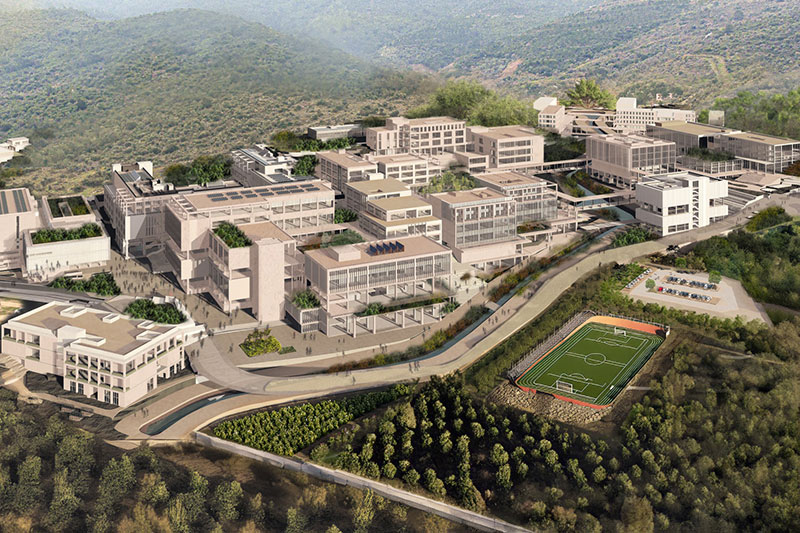
IZMIR UNIVERSITY OF ECONOMICS GÜZELBAHÇE CAMPUS
DetailsGLOBAL CAREER
As Izmir University of Economics transforms into a world-class university, it also raises successful young people with global competence.
More..CONTRIBUTION TO SCIENCE
Izmir University of Economics produces qualified knowledge and competent technologies.
More..VALUING PEOPLE
Izmir University of Economics sees producing social benefit as its reason for existence.
More..
You are one step ahead with your graduate education at Izmir University of Economics.